Update from the AGM
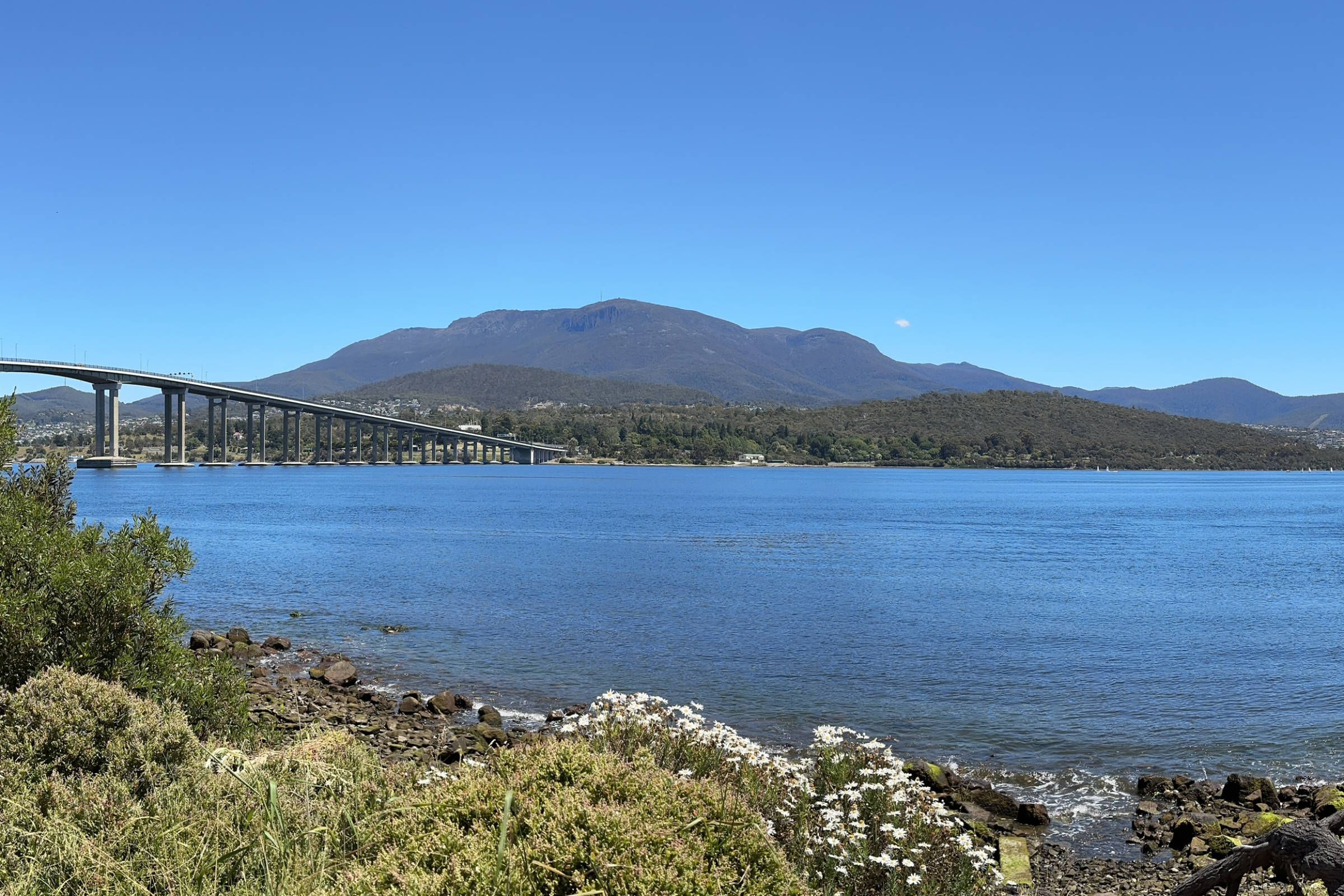
kunanyi / Mount Wellington and the Tasman Bridge viewed from Hobart’s Eastern Shore.
Image: Derwent Estuary Program
In November the DEP held its annual general meeting. At the meeting we held our annual election of our independent Board of Directors, who volunteer their time and expertise to guide the program.
At this year’s AGM, we farewelled our Chair Nick Heath and member Gary Arnold. Both Nick and Gary have been with us since 2017 and are two of our longest serving members. Nick in his role as chair has provided uncountable levels of energy and enthusiasm and Gary’s extensive experience in local government has been invaluable for the DEP. Both Nick and Gary were instrumental in taking the DEP from operating in a government agency to a highly successful and well-respected not for profit organisation.
We have been very fortunate the have had their experience, interest and support for so many years and we cannot thank them enough for everything they have contributed to the DEP.
At the AGM we welcomed new Chair Catriona Macleod. Hear from Catriona below.
Catriona Macleod on collaboration, science and the value of the DEP
For new Chair Catriona Macleod, collaboration remains at the heart of the work of the DEP. That collaborative approach is one that has shaped both her career and her long-standing involvement with the program.
With a background in environmental impact assessment and evaluation, particularly in marine and coastal systems, Catriona has been connected to the DEP since its earliest days as both a researcher and an advocate.
“I have been involved with the Derwent Estuary Program since it first began,” she said.
“Collaborative research and ecosystem-based management have always been central to my work, and the DEP applies those principles exceptionally well.”
Catriona said the program’s strength lied in its ability to bring together science, community, industry and government to manage the estuary as a connected system.
“It is not just about understanding environmental impacts,” she said.
“It is also about how we engage with the community and support our partners to manage the system as effectively as possible.”
Despite operating with a small team, Catriona said the DEP consistently delivered outstanding outcomes.
“They truly punch well above their weight and are doing something that is significant not just for Australia, but internationally.
“That continuity of data allows us to understand how this complex system responds over time.
“The DEP’s ability to interpret that information and provide long-term, strategic advice is an invaluable resource for partners.”
Having served on the board for three years, Catriona said she was honoured to take on the role of Chair.
“I have been hugely impressed by Nick Heath’s leadership and I hope I can build on the strong foundation he has established,” she said.
Annual Report
At the AGM we also tabled our 2024–25 Annual Report.
Some of the year's highlights included:
- Strategic Plan 2025–30 approved for implementation.
- Beach Watch: 17 out of 19 beach sampling sites in Hobart are suitable for swimming and have a Good or Fair long-term water quality rating.
- Derwent River monitoring and restoration projects continued with funding support from the Australian Government’s Urban Rivers and Catchments Program. Projects include stormwater and rivulet monitoring; saltmarsh restoration; Spotted Handfish survey and habitat installation; and data visualisation.
- The Ian Potter Foundation real-time water quality analyser project completed.
- 2023 Annual State of the Derwent Report Card published.
- DEP supported PhD student to value the Derwent’s natural assets.
- Received City of Hobart funding for artist to create clay burrows for Little Penguins.
Monday 5 January 2026