
Humpback whale
Community type
Habitat type
Rocky reefs, kelp beds and inter-tidal zone
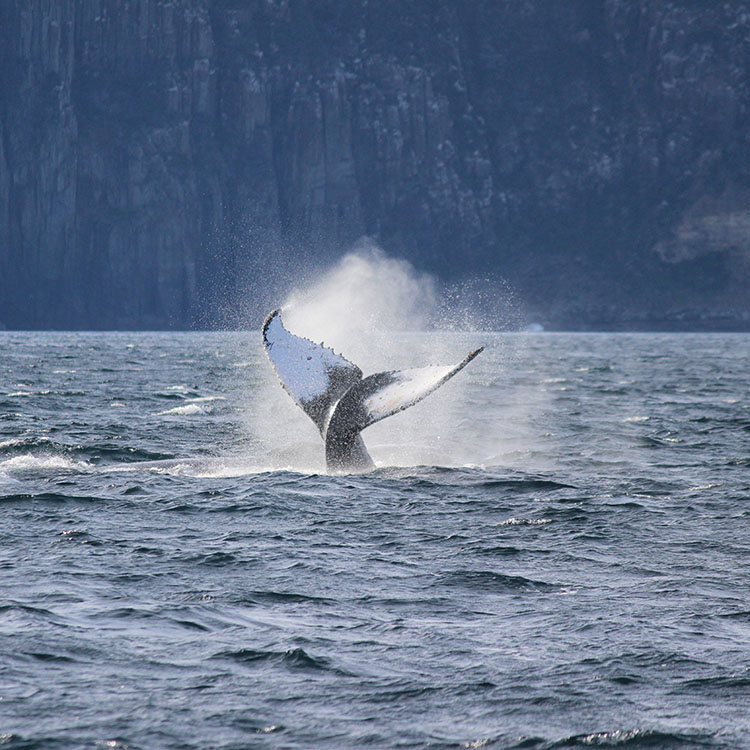
Each humpback whale’s fluke, or tail, has a unique pattern! Happy whale is a citizen science project where people can upload photos of humpback whale tails, so that scientists can match these to individual whales.
Humpback whales can be seen between May and December along the coasts of Tasmania during their annual migration from Antarctica. Recently, marine mammal scientists have found that humpback whales sometimes give birth and opportunistically feed in south-eastern Australia as they migrate up towards the Great Barrier Reef. Some humpback whales visit the Derwent estuary to rest on their long journey. Eastern Australian humpback whale populations are stable with 25000 individuals, and continue to successfully recover from commercial whaling.