
Long-nosed fur seal
Community type
Habitat type
Rocky reefs, kelp beds and inter-tidal zone
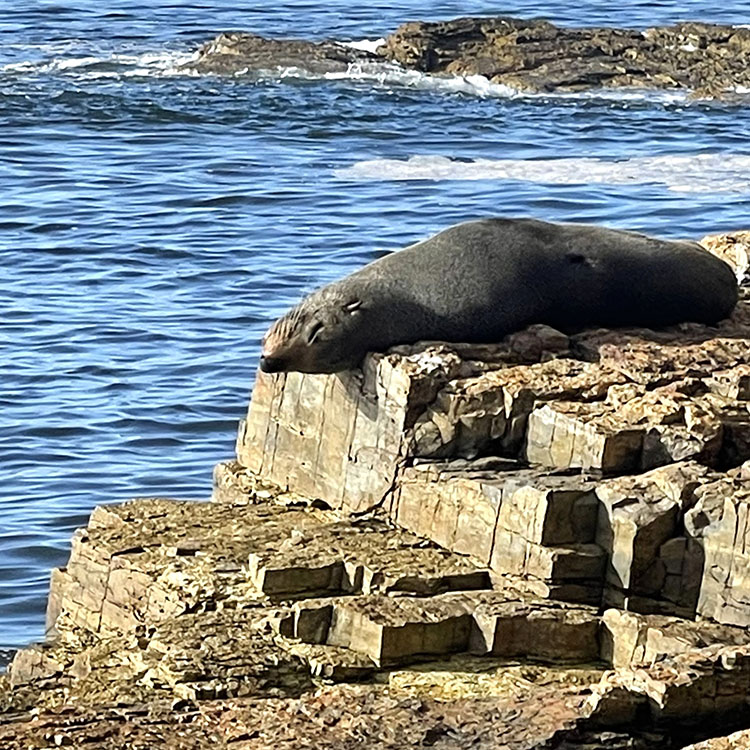
Long-nosed fur seals are the second species of seal observed within the Derwent. Also referred to as New Zealand fur seals, they are commonly seen in coastal areas outside of Tasmania. In more recent years, they have been observed hauled out in large numbers in Blackman’s Bay and Tinderbox, and swimming in the upper estuary. Their diet includes fish such as redbait and jack mackerel, and also seabirds including little penguins.
Long-nosed fur seals were subject to historical sealing which decimated Tasmanian populations. In the 1980s, they were found breeding in south coast of Tasmania once again. Today, the total Tasmanian population is estimated between 4,000–45,000 adult seals. Pups are born between November – January and are weaned at 4–6 months old.
Similarly to Australian fur seals, long-nosed fur seals are subject to threats including avian influenza, aquaculture-seal conflicts, and human disturbance at breeding colonies and haul outs. It is recommended that boats should not approach colonies closer than 50m.