
Bastard trumpeter
Community type
Habitat type
Rocky reefs, kelp beds and inter-tidal zone
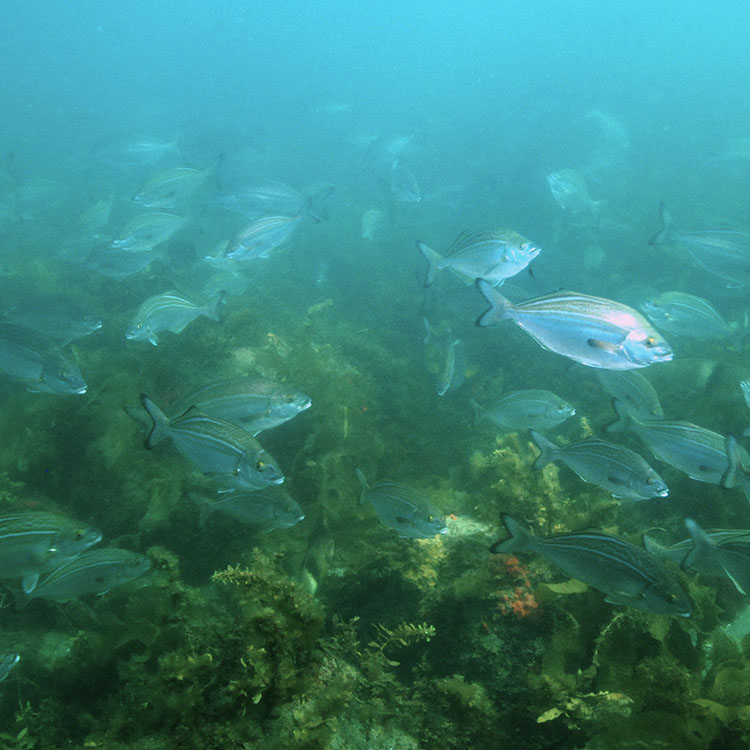
Bastard trumpeters (Laptridopsis forsteri) were given their unusual name to distinguish them from a different species known as the “real trumpeter” (Latris lineata).
Adults can grow up to 65cm in length and are identifiable by copper stripes along their body and a black margin on their caudal fin, or tail. They occur at depths between 2–60 metres and were often seen in resident schools swimming around rocky reefs in the past. However, the 2024 Rocky Reef Survey found that bastard trumpeter numbers have declined significantly in the Derwent Estuary since 2010, possibly in response to a major increase in recreational spearfishing during this period. Their diet consists of benthic invertebrates such as snails, clams, crabs and marine worms.