
Orca/killer whale
Community type
Habitat type
Rocky reefs, kelp beds and inter-tidal zone
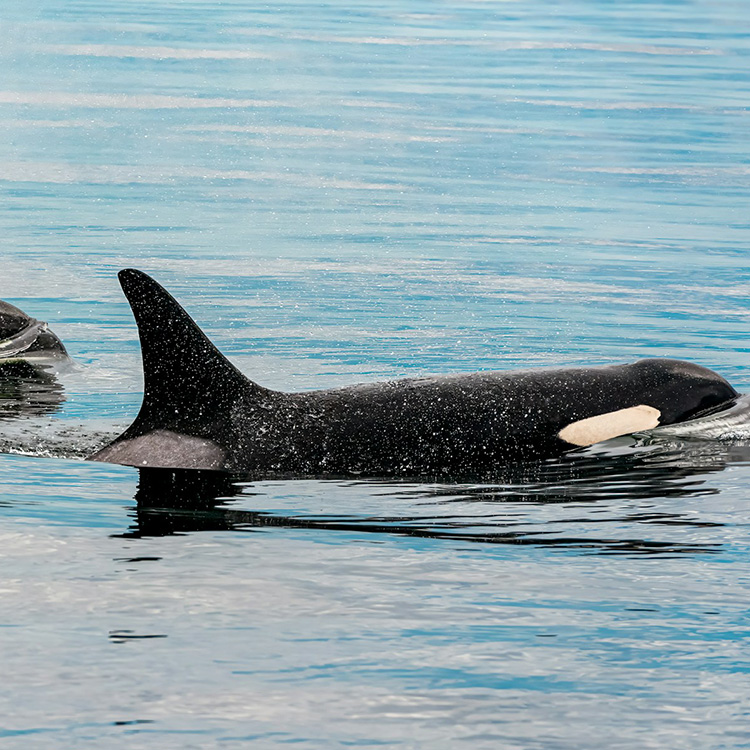
Globally, there are several different sub-populations of killer whales, and each population varies in physical appearance and feeding ecology/specialisation. Individual orcas can be distinguished by their unique dorsal fin and while markings, which scientists use to identify individuals and track migrations.
Adult males in the population visiting Tasmania typically grow up to 6 metres, and may visit all year round. Recent studies have shown that the East coast of Tasmania has highest habitat suitability for killer whales. Additionally, along the continental shelf surrounding Tasmania, orcas have learnt to hunt blue eyed trevalla caught by long line fisheries! This problem, called depredation, has negative implications for long line fisheries operations, behavioural change in killer whales, and human-wildlife conflict.